The open AI operating system.
Wilhelm brings the strongest open-source software together into one stack: one login, one surface, one standard. Digital infrastructure a society can own and build on, like water, power, and roads.
One operating system.
A new AI, App 'n Web Standard: HTML67
HTML6 brings UI, presentation, and text back into declarative markup - no bundler, no React. HTML7 lifts the legal and document layer into HTML: a hybrid PDF/HTML standard for contracts, norms, and science. Published spec, reference runtime.
The Open Source Bible: The Wilhelm Techstack
A bible of the strongest open-source packages, held together by an orchestration and OS layer. The result: an operating system for natural and legal persons - civil law, applied in code.
One stack. No silos.
Not fifty siloed tools that have never met. Every app docks onto one of three pillars - orchestrated by one layer, described in one language. And every node replaces a subscription you know. The stack, from the inside:
One file per app.
Docker runs containers. Wilhelm runs apps: every app is a folder with a manifest that says what it needs, what it gives back and under which licence. The stack reads it and does the wiring - proxy, single sign-on, secrets, the Nextcloud tile, the store card.
# apps/shop/
manifest.json      # the contract
secrets.spec.yaml  # names, never values
workflows/*.json   # n8n, auto-imported
service/           # the container
nextcloud/         # the tile
{
"id": "shop", "name": "Amazing", "vendor": "medusa",
"license": { "service": "MIT", "wrapper": "Proprietary" },
"requires": ["nextcloud", "n8n"],
"optional": ["vault", "crm", "search"],
"provides": ["store-api", "nc-app", "n8n-workflows"],
"oidc": { "asClient": true },
"compliance": ["gdpr"]
}Proven at scale.
The technologies inside Wilhelm already run at governments, universities and global companies - the same containers, the same code. Hover a name to see which app of the stack they rely on.
Standards, not promises.
The packages in the stack carry real certifications and compliance standards - ISO 27001, SOC 2, GoBD, eIDAS, GDPR. Every seal the stack holds, in one place; hover one to see which apps bring it. Wilhelm's own apps are on the same path: certification in progress.
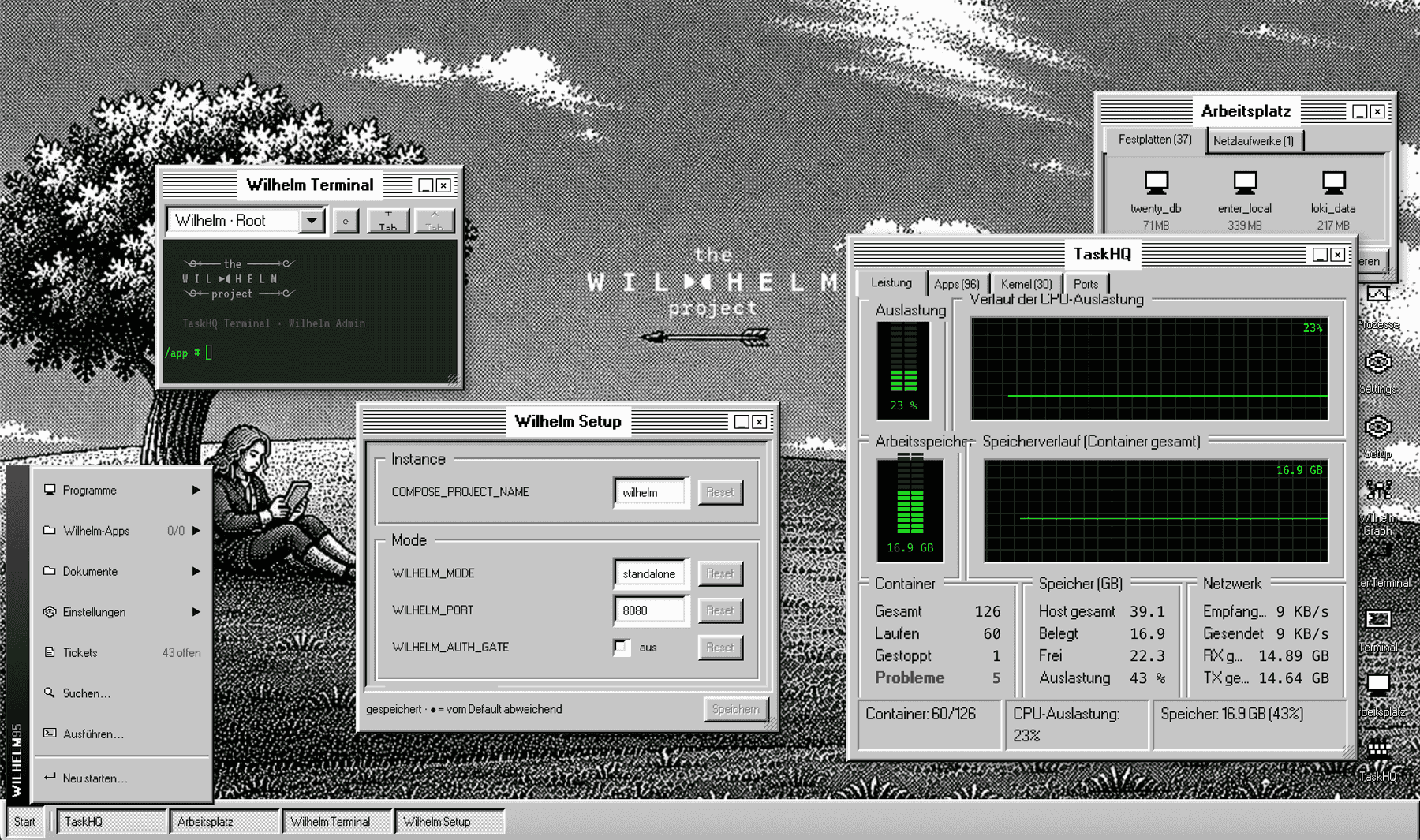
The Wilhelm Admin Console.
Docker manager, AWS console, terminal and settings - one place.
Built-in editors.
Nothing leaves the stack to get edited: office documents, designs, CAD models, mind maps, video - every format opens in the browser, on your server.
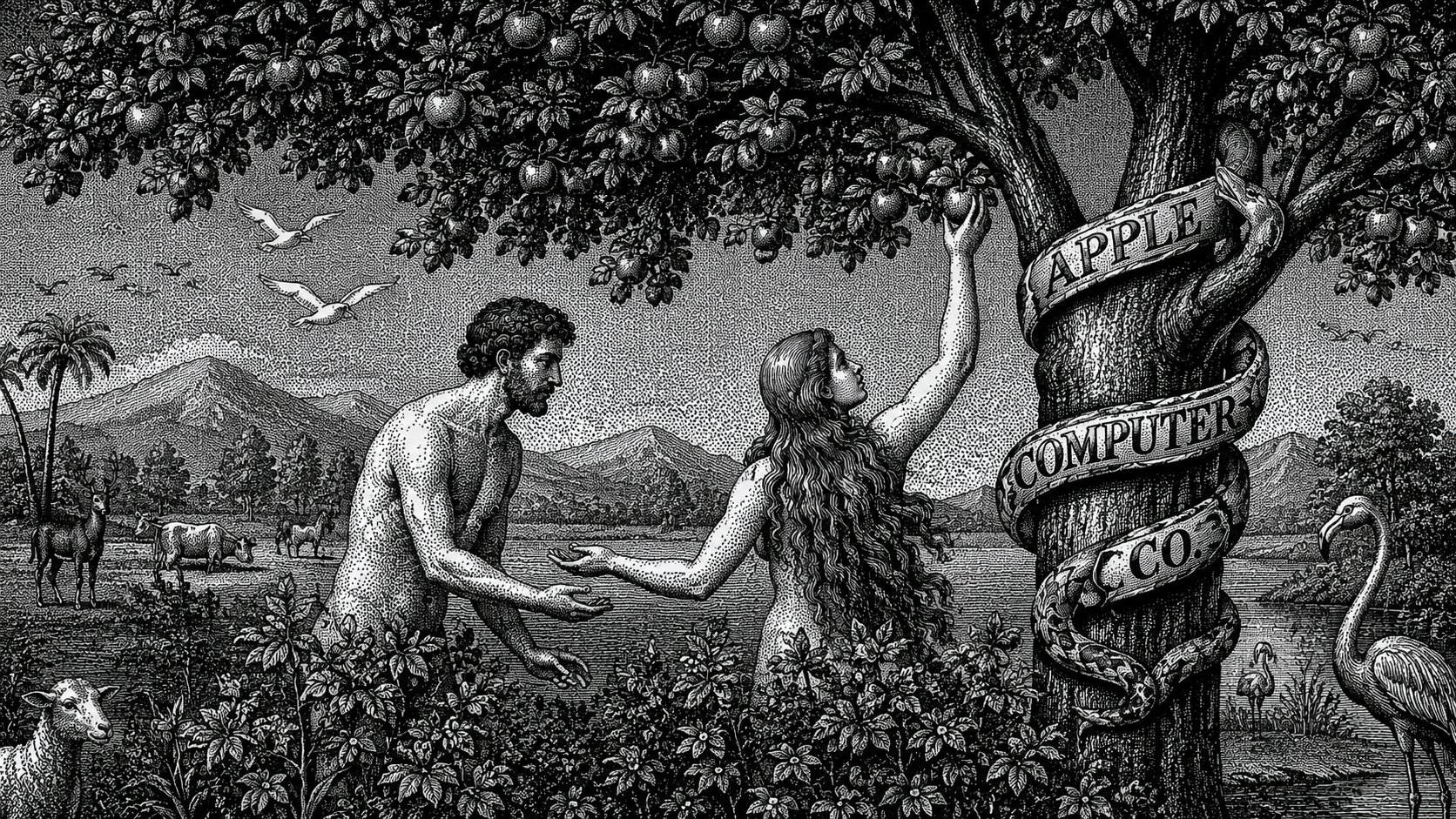
Hypertext, updated
for the AI hype.
The language anyone understands: Humans, LLMs, websites, apps. One line of markup, a finished component. No React, no bundler, no build step. And the tags really are called that: <geo>, <signature>, <graph> - HTML, as if these elements had been there all along. Four examples, all live:
| Year | Apps in the stack |
|---|---|
| 2020 | 3 |
| 2021 | 9 |
| 2022 | 14 |
| 2023 | 22 |
| 2024 | 31 |
| 2025 | 42 |
| 2026 | 53 |
The last document.
HTML67 doesn't only add a hyper, AI and editing layer to HTML5 - it adds that same layer to the file types you already use. Not new types: a layer on existing ones. Every HTML tag that stands for a file carries it - <img> a JPEG, <video> an MP4, <model> a GLB, <table> a spreadsheet. Save the page as .html.glb and you get a real GLB that any viewer opens, with the editable HTML67 page riding inside - exactly like .html.pdf. Rename .html.jpg, .html.png, .html.glb, .html.mp4 or .html.pdf to .html and the page is back; every other carrier opens by dropping it onto any HTML67 page. No external software needed: everything ships inside the file, in under 2 MB.
- 📕.html.pdfHybrid - valid PDF, editable page
- 📘.html.docxWord, with real tables
- 📗.html.xlsxEvery table a worksheet
- 📙.html.pptxEvery slide a slide
- 🖼️.html.jpgImages - also .png; rename to .html and it opens as the page
- 🎬.html.mp4Video - also .mov; rename to .html and it opens as the page
- 🧊.html.glb3D models; rename to .html and it opens as the page
- 📊.html.jsonLottie animations and data
- 🗺️.html.svgMaps, diagrams, drawings
We solve problems.
One HTML file instead of framework, bundler, utility CSS and component libs - the numbers from the pitch, unchanged:
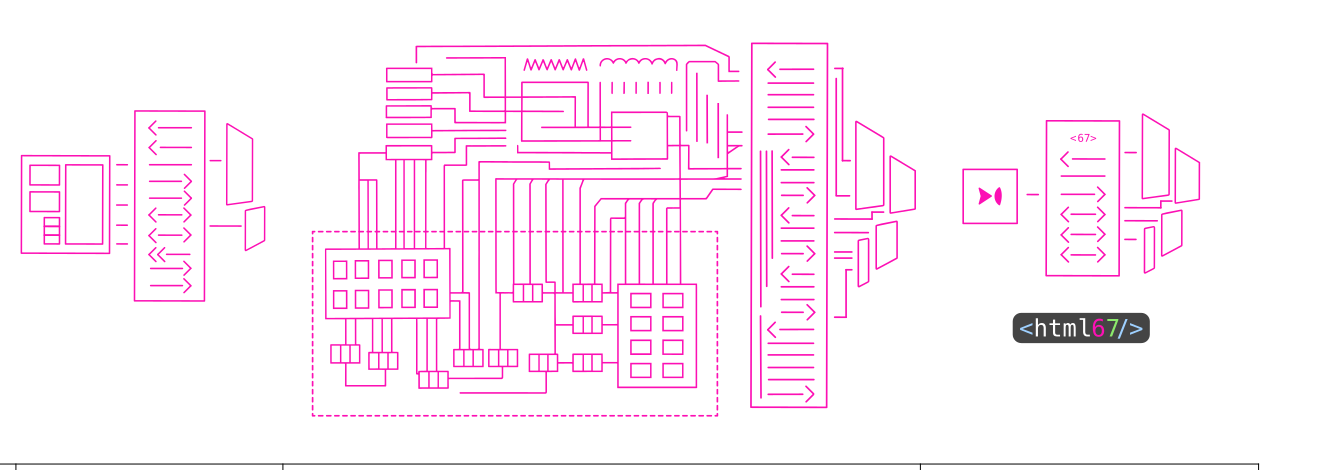
| HTML · 2000s | HTML5 · average today | HTML67 | |
|---|---|---|---|
| Typical build | HTML, CSS, JS File | framework + bundler + utility CSS + component libs | 1 HTML File |
| Intuitive Editing | ● | ● | ● |
| Setup time | 30min | 15min-240min | 1min |
| Total page weight | ~50-200 KB | ~2000-5000 KB | ~50-400 KB |
| Loading time | ~1-3 s | 3-10 s | < 1 s |
| External servers / origins | 1 | 8-20+ (CDNs, fonts, analytics, embeds, ads) | 1 |
| CDNs / third parties | 0-2 | 5-150 | 0 |
| HTTP requests | 5-15 | 70-150+ | 1 |
| Legal (DSGVO · DMA) ready | ● | ● | ● |
| Accessibility (BFSG) ready | ● | ● | ● |
| AI- & SEO-ready | ● | ● | ● |
| Universal standard (web, print, apps, chat, VR) | ● | ● | ● |

Text Models powered by Hypertext.
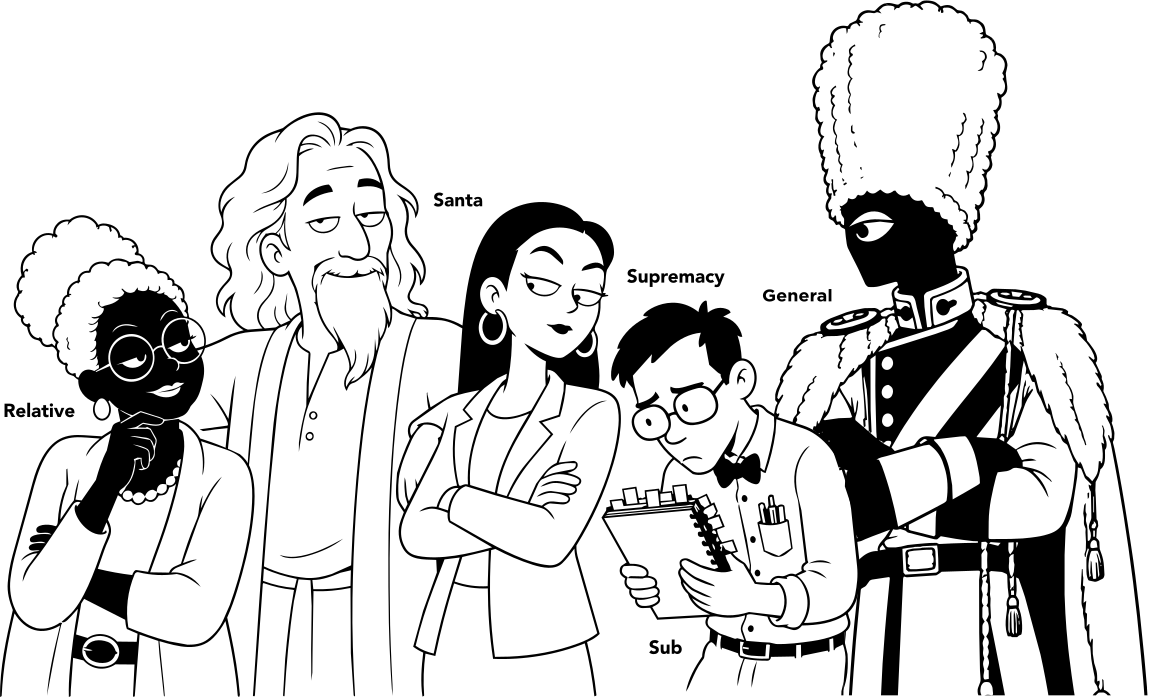
The first digital intelligences that feel like family - built entirely on HTML67. That is not decoration: markup compresses context, so a model reads a tag where prose would cost a paragraph, and writes back a map, a chart or a signed contract instead of a wall of text. Five characters, one household:
And this is what they chat with. Not walls of text - a message can hold a map, a contact, a live GlyphUp edit or a signature field, because it's all the same HTML67:
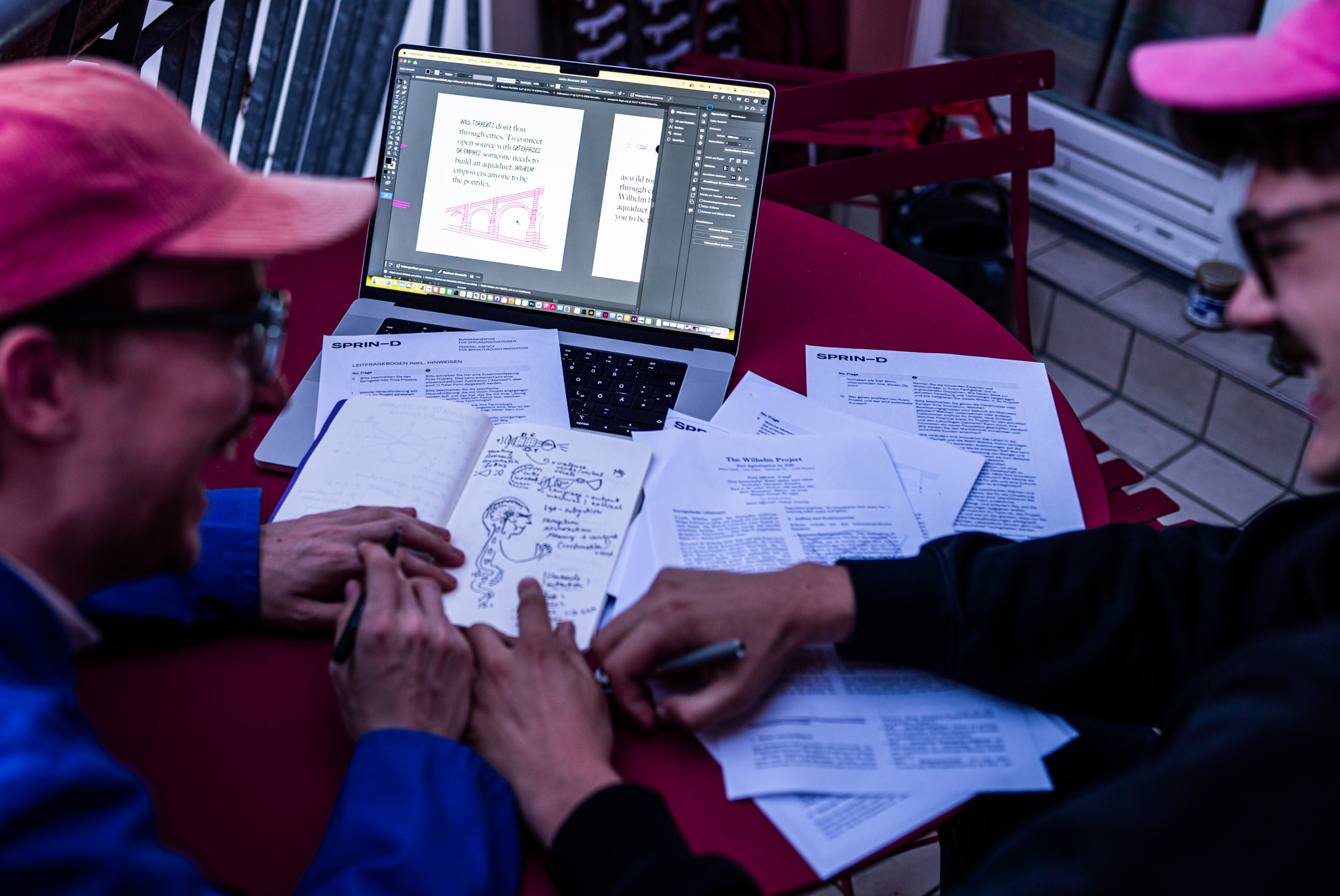
The Wilhelm Collective
Leo, to me, is the European counterpart to Alex Karp. They've read the same philosophers, but only one of them actually understood them.
Sven has Andy Warhol's eccentricity and Steve Jobs' stubbornness. Keeping up with him takes a lot of energy - but it's exactly that kind of energy Europe needs.